Compare four things in this order: what the lot includes, what the lease says, which rules apply to your RV and your household, and the condition of the lot itself. Rent alone tells you little, since one lot may include water, power and trash while another bills them on top. Verify who is renting the lot, visit it, get the written terms before you pay, and compare the full package instead of one number.
Introduction
You type “rv lots for rent near me” and get a long list of parks, ads and map pins. Each one shows a price and a phone number. Very few tell you what you will really get for that price.
A longer RV rental carries more obligations than a nightly booking. You may park for a month, a season or longer, so small details start to matter. A missing sewer hookup, a rule about your RV’s age or a surprise utility bill can cost you weeks of stress.
No article can list the lots near you, since your town, your rig and your dates change the answer. This one gives you a single set of checks to run on each lot you find, so you compare them fairly.
Each section below stands on its own, so jump to the one you need.
What Is an RV Lot Rental?
An RV lot rental is an agreement to park your RV on a set piece of ground for a set period, such as a month or a season. You get the right to use the space. You do not own the land. The agreement, not the listing, decides what you can do there.
A lot rental differs from a nightly site. You pay for a longer period, and the rules touch more of your daily life. Review the agreement with care, since a longer stay can involve duties a nightly booking does not.
Lots come from three kinds of landlords. Knowing which one you deal with tells you who answers when something breaks.
A lot in an RV park
An RV park manages many lots under one set of posted rules.
A lot rented by a private owner
A private owner rents a lot on land they own, and you deal with one person instead of an office. Even if the arrangement seems informal, get the terms in writing, and ask about everything a park would print on a sheet.
A lot in a resort or owner-held community
In some communities, individual owners hold their own lots, and some of them rent those lots out. You may end up under two sets of rules, the owner’s and the community’s. Find out whether renting is allowed at all.
Where Do You Find RV Lots for Rent Near You?
Websites give you leads. The useful details come from phone calls and visits.
Park websites and phone calls
Search a map for “RV park” plus your town and nearby towns. Open each park’s rates page and rules page, then call. A rates page shows a starting price, but only the office can tell you the full monthly cost for your RV and your dates. Ask the same questions on each call and write the answers down.
Owner listings and local ads
Community boards, classified ads and word of mouth can lead to private lots. Ask for the details a park would give you, from what the lot includes to how you end the rental. Avoid paying before you have verified the property, the person’s authority to rent it, and the written terms.
How to confirm the person renting has the right to
With a private lot, check that the person renting to you can do it. Ask whether they own the land or manage it for someone else. If they rent the land themselves, ask for the landowner’s permission in writing. If you are unsure, ask the county office how to look up who owns a parcel, or ask a local attorney.
Owning the land is not the same as having the right to rent it for RV stays. Zoning, permitted use, community rules or an earlier agreement can limit what an owner may offer. Confirm both the person’s authority to rent and whether your planned use is allowed there.
Scammers copy the pictures and description from a real listing. Before you pay a private owner, run through this list.
- Visit the exact address, or send someone you trust.
- Search the address with the owner’s name. Other ads for the same address under a different name are a sign of a scam.
- Get the full agreement and an itemized list of charges.
- Be wary of pressure to pay fast. Wire transfers, gift cards and cryptocurrency work like sending cash.
- Hold back ID and bank details until you have confirmed the rental is real.
What Does the Lot Include?
Two lots with the same rent can give you very different things, so compare what each price covers.
Pad and hookups
Look at the pad surface and ask whether it is level. Then check the hookups. Ask about the exact service at the lot you would occupy, not the park in general. Find out whether it is 30 amp, 50 amp or both, and match that to your RV’s plug. Check whether the pad has water and a sewer or septic connection.
Wastewater, water and trash
If sewer is not connected at the site, find out where the approved dump station is, whether long-term guests may use it, and what hours or charges apply. Ask how trash is handled and whether it costs extra.
Utilities: included or billed separately
Utility setups vary. One park’s published month-to-month agreement says water, sewer, electricity, garbage and internet are included in the rent. Another lot may meter your electric and bill it each month. Neither is wrong, but you cannot tell which costs less until you add everything up. Check two things for each utility: how it is provided and billed, and whether the service fits your RV and your plans. Power, water, sewer and internet matter most here.
Use the same worksheet for each lot. Under recurring monthly cost, record the rent, electric, water and sewer, trash, internet, taxes and any recurring fees. Under upfront cost, list the deposit, setup charges and the first payment. Compare the monthly totals with each other, and compare the upfront cash on its own. Mark which deposits are refundable, and ask the owner to confirm the charges and the refund terms in writing.
What Does a Lot Lease Say?
The written agreement defines the terms of your stay, subject to the law where you live. To show what to look for, this section walks through clauses from one park’s published month-to-month agreement. It is not a standard lease, legal advice or a template. Your agreement may differ, and local law may affect which terms apply, so treat each clause below as a question to ask.
Month-to-month or fixed term
The example agreement says it will establish a month-to-month tenancy. A month-to-month agreement runs in monthly periods, but the details still matter. Check the payment dates, the notice needed to end it, any minimum commitment, and what happens if you leave early. A fixed term has a set length, such as six months. Ask which one the lot offers, and whether a fixed term locks your rent for that time.
Deposit and refunds
The example agreement does not mention a security deposit. It does say the monthly rent is not refundable if the tenant leaves before the final day of the month. Ask whether there is a deposit, when you get it back, and what happens to your rent if you leave mid-month. Get the answers in the lease, not only on the phone.
Utilities and heating
The example agreement bans electric space heaters and says the park is not liable for bursting pipes. If you plan to stay through winter, ask how you may heat your RV and who is responsible for frozen water lines.
Insurance and registration
The example agreement makes the tenant responsible for insurance on the RV and bars unlicensed vehicles. Ask whether the lot requires proof of insurance and a current registration, and call your insurer to ask whether your policy covers a parked RV.
Rent increases, rule changes and entry
The example agreement says no rent increase takes effect less than thirty days after written notice. It also lets the park change its rules and lists the reasons staff may enter your space. Find out how much notice you get before rent or rules change, and when staff may enter your lot.
How far lease terms can be enforced depends on state law and on the actual agreement. This is not legal advice.
Which Rules Can Affect You?
Rules decide whether you can stay at all, so learn them before you pay a deposit.
RV age and type limits
A park can set its own limits on the age or type of RV it accepts. Learn this on your first call, not at the gate.
Living in the RV year round
Ask whether you may live in your RV full time. A park’s yes may not settle what the town or county allows, so get the answer in writing.
Pets, guests and quiet hours
Find out how many pets you may bring, whether visitors must register, and when quiet hours begin.
How Do You Check the Lot Itself?
An in-person visit can reveal details missing from a listing.
Visit in person
Visit the lot before you pay, in daylight and, if you can, in the evening. Walk the whole park, not only your lot. Notice how the grounds are kept and how loud it is.
Drainage, access and turning room
Measure your RV’s length and height, then walk the entry road and the turn into your lot. Check for low spots where water could pool. Confirm the RV can enter and leave without hitting low branches, signs or gates. Look for room for slide-outs and a tow vehicle, and firm ground under the RV’s weight. Make sure cords and hoses reach the connections without crossing a road.
Flood risk
Before you sign, look up the lot’s address in the Flood Map Service Center, the tool for finding your official flood map. Read the map information with care, and ask the owner about any known drainage or flooding problems at the lot.
A map is one part of the check. It does not guarantee the site will stay dry. If the lot is in or near a mapped flood area, or you worry about its elevation or drainage, ask the local floodplain administrator or another qualified local professional before you commit.
Park Lot, Private Owner or Resort Lot?
No one type suits all renters. What matters is that someone answers your questions in writing. The table shows who you ask in each case.
| Question | Park lot | Private owner lot | Resort or owner-held lot |
| Who writes the lease? | Park management | The landowner | The lot owner, sometimes with a community office |
| Who do you call for a repair? | The park office | The owner | The lot owner or the community office |
| Whose rules apply? | The park’s posted rules | The owner’s terms | The lot owner’s terms plus community rules |
| What to check first | The rate sheet and posted rules | Proof the owner can rent the land | Whether renting is allowed at all |
Choose the option whose costs, rules and agreement you understand.
What Should You Sign?
A written lease versus a rate sheet
A rate sheet shows prices, and a lease sets the terms. Ask for the lease before you arrive and read it at home, not at the counter.
Questions to settle before you pay
Settle these six points first: the total monthly cost, month-to-month or fixed term, the deposit and its return, the notice for rent or rule changes, any limits on your RV’s age, size or type, and the notice you owe to leave. If an owner cannot answer, get the answers before you pay or sign.
A note on getting local help
For a long lease, an unusual clause or a private lot, a local attorney can read the document before you sign. This article gives you questions, not legal advice, and local rules change the answers.
How Do You Compare Three Lots Side by Side?
Fill in one column per lot, using the same stay length for each. Keep recurring monthly costs apart from deposits and other upfront costs.
| Check | Lot A | Lot B | Lot C |
| Monthly rent | |||
| Electric and billing | |||
| Water, sewer and trash | |||
| Taxes and recurring fees | |||
| Deposit and upfront costs | |||
| RV size and age accepted | |||
| Full-time living allowed? | |||
| Lease and notice terms | |||
| Site condition and access | |||
| Flood map and drainage checks | |||
| Written terms confirmed? |
What Does Renting a Lot Look Like at Esquire Estates?
Esquire Estates Mobile Home and RV Park sits at 425 120 W, Castle Dale, UT 84513. Here is what the park publishes on the points above.
On cost, the rates page lists monthly full-hookup RV sites starting at $585 a month. It says electric is included, taxes are not included, and rates are subject to change. The office can give you the final total for your RV.
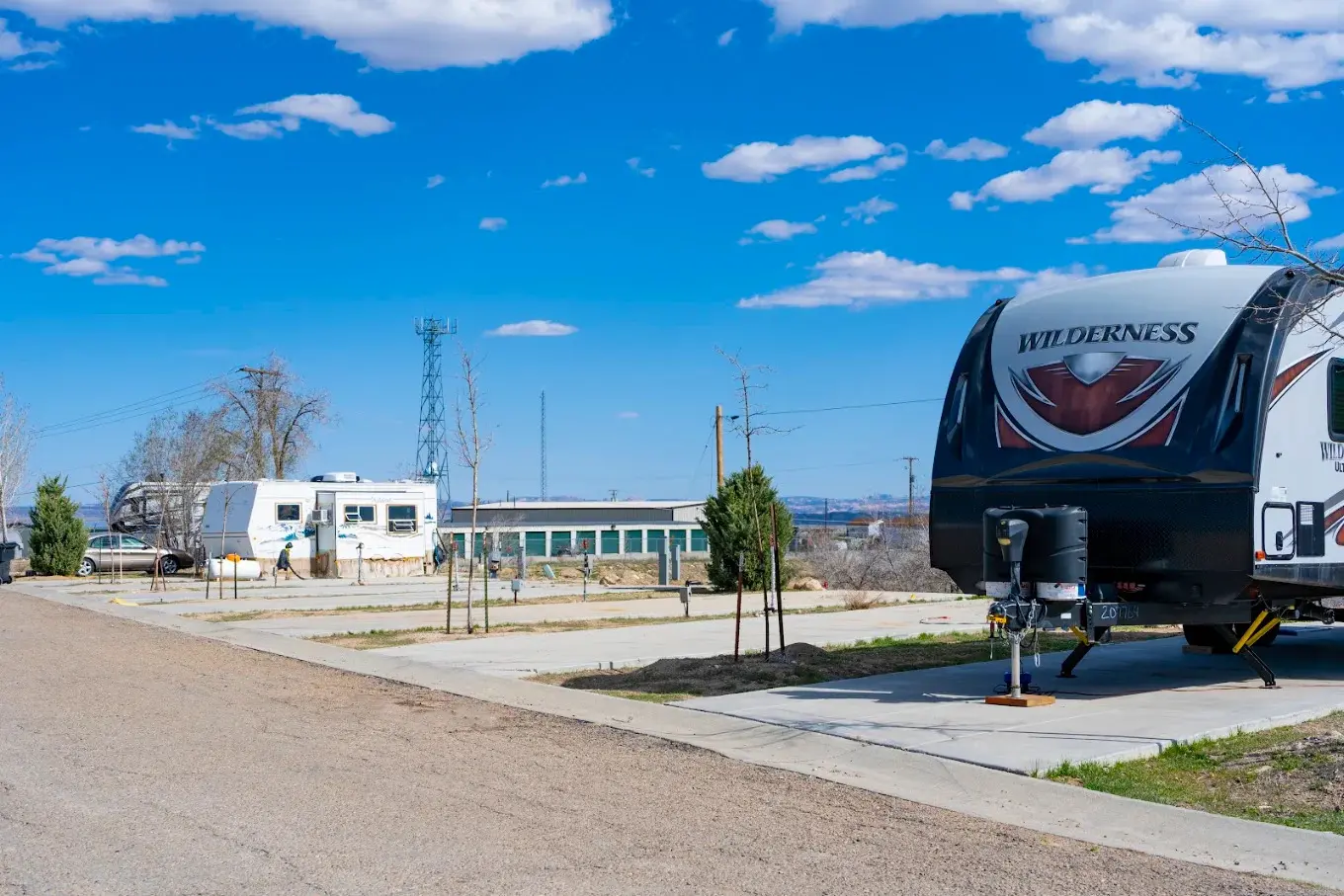
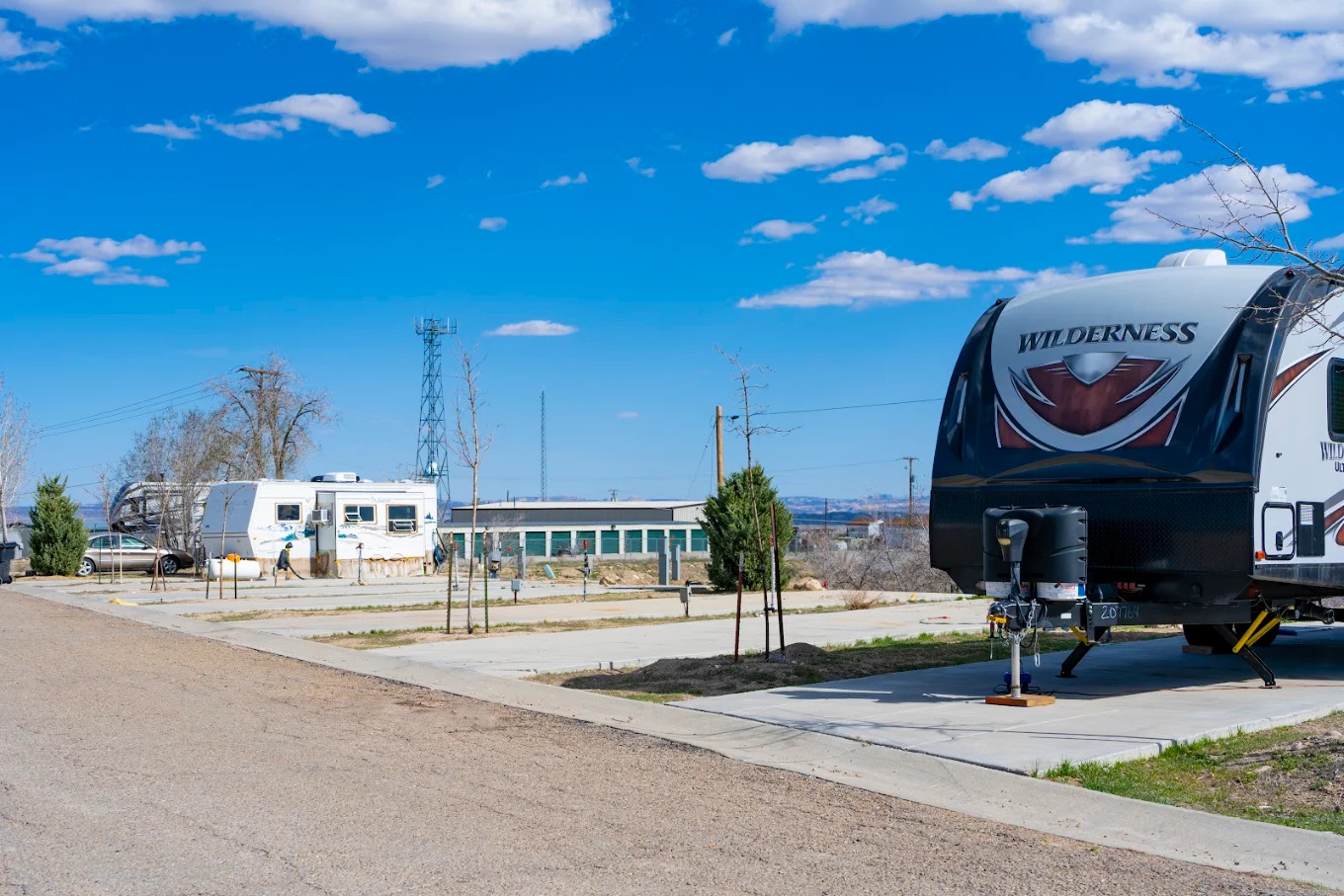
On the lot itself, the full-hookup page describes 30 and 50 amp service, level concrete pads at back-in sites and park-wide WiFi. The long-term sites page, which uses Huntington in its title, lists the same Castle Dale address. It names water, septic, a picnic table and parking, and says the sites are spacious enough for larger RVs. Ask the office about the exact size and layout of the lot you would get.
On rules, the support page says the RV age limit is 15 years and asks guests to contact the park for a possible exception before they reserve. It allows up to two pets per RV, and pets must be on a leash at all times.
The published pages do not state the lease length or a deposit amount, so ask the office about both. You can reach the park through the contact page.
Conclusion
Comparing RV lots comes down to a few steps. Find out what each lot includes, add up the true monthly cost, and read the lease before you pay. Learn the rules that touch your RV, then visit the lot and check the ground, the access and the flood map.
A low rent on a listing can cost more once utilities and fees are added up. Written terms help you understand the costs and duties before you arrive.
FAQ
What is the difference between an RV lot and an RV site?
Parks and listings use the two words in different ways. Some use “site” for a space booked by the night or week and “lot” for a longer stay, but the terms are not universal. Check the rental period, what the space includes, and the agreement that applies.
Can I live in my RV full time on a rented lot?
It depends on the park’s rules and on local rules in the town or county. Ask the park, ask the local planning office if the answer is unclear, and get it in writing before you sign.
Do I need a written lease for an RV lot?
Ask for one. A rate sheet shows prices, while a lease sets the terms, including notice, deposits and rules. Whether the law requires one depends on your state, so ask a local attorney if you are unsure.
Are utilities included in RV lot rent?
It depends on the lot. One park’s published agreement includes water, sewer, electricity, garbage and internet in the rent. Esquire Estates says on its rates page that electric is included and taxes are not.
Can an RV park say no to my RV?
A park can set rules about the RVs it accepts. Esquire Estates, for example, sets an RV age limit of 15 years and asks guests to contact the park about a possible exception before they reserve.
How do I know a private owner can rent me the lot?
Ask whether the person owns the land or manages it for someone else. If they do not own it, ask for the landowner’s permission in writing. Also confirm that RV use is allowed on the property. Then get a signed lease. For a long rental, a local attorney can check the paperwork.