

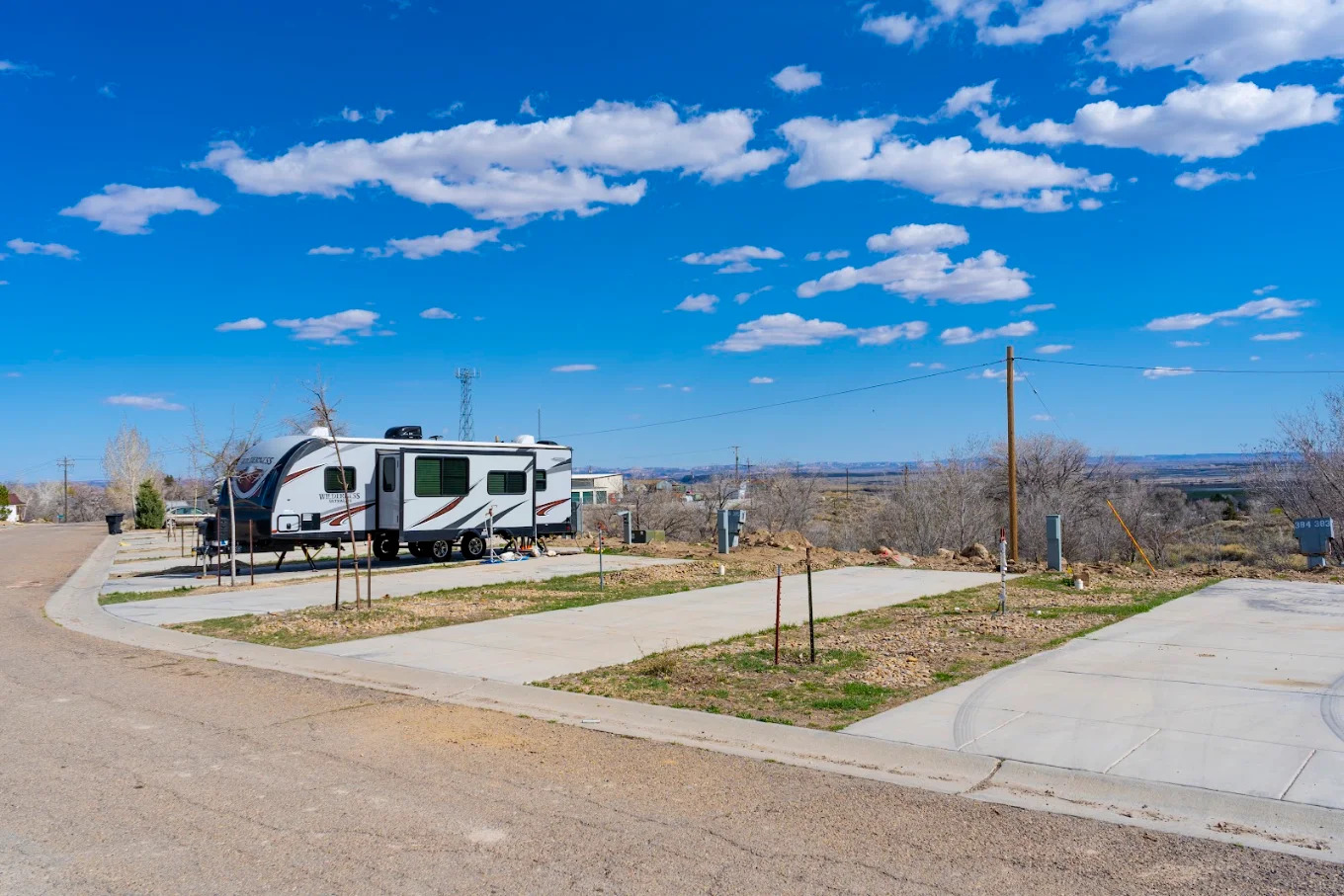
The main difference between a long-term and a short-term RV site is the term you book, not the site itself. A short-term stay is paid by the night or the week and ends quickly. A long-term stay is paid by the month or the season, and it can come with more paperwork and less room to leave early. The cheaper choice depends on your exact number of nights, so price your stay at each rate before you book.
| Question | Short-term stay | Long-term stay |
| How long is the stay? | A night to a few weeks | A month or more |
| How is it billed? | By the night or the week | By the month or the season |
| What about cost per night? | Higher rate per night | Can be lower, so check the math |
| What about paperwork? | A quick reservation | Can include a deposit, screening, or a signed agreement |
| How easy is it to leave? | Easy | Depends on the refund and notice terms |
| Who is it for? | Trips, test stays, open plans | Work contracts, seasons, a steady base |
These labels are a practical comparison, not an industry definition. Each park sets its own terms.
Introduction
Picture the booking page. The same park lists a nightly rate, a weekly rate, and a monthly rate. You plan to stay about three weeks. Which button do you press?
Most guides answer with two lists. Short stays give you freedom, and long stays give you routine. Those lists don’t help when your stay is 10 nights, or three weeks, or five months. You still have to guess.
A smaller question works better: what will your stay cost at each rate, and what do you give up for the lower price? A lower rate can come with a catch. You may have to pay ahead, pass a screening, or accept that leaving early costs you money.
So this article helps you test your own stay. You’ll see what separates the two kinds of stay, how to price your nights, and how to compare two quotes. Every park sets its own terms, so treat the examples as models and confirm the details with the park you pick.
What Is the Difference Between a Long-Term and a Short-Term RV Site?
Some parks offer the same type of RV site at nightly, weekly, and monthly rates. Esquire Estates, for example, offers daily, weekly, and monthly rates for RV sites. Other parks hold certain sites back. A Nevada campground lists its Premium Plus extra-wide sites for short stays, not for extended stays. So check both the rate and the specific site you can book.
How Parks Bill a Month
A month is not always a calendar month. One California resort, under its current agreement, bases monthly rates on 30-day periods and converts any stay of less than 30 days to a daily rate. The Nevada campground also bills long-term stays in 30-day periods, and it prices the same site differently depending on how you pay. Both are one park’s own policy, not a standard rule.
So before you count on a monthly rate, find out what dates the quoted amount covers, and whether a shorter stay still qualifies.
Why Parks Define Long-Term Differently
No single number makes a stay long-term. Parks differ on four things you can check by phone: the minimum number of nights, the billing cycle, which sites are open to long stays, and whether you must prepay. Keep your own plan in days, such as “about 21 nights,” and compare every park against that number.
Which One Costs Less for Your Stay Length?
The cheaper choice is the one that costs less for your exact number of nights, once you add everything the park charges. Start by writing down your number of nights. Next, price those nights at the nightly, weekly, and monthly rates, using whole weeks or months, since that is how parks bill them. Then add electric, taxes, and fees to each total. Last, compare the totals, not the headline rates.
This guide doesn’t quote a typical price, because rates change with region, season, and what the park includes. Here is a worked example with published numbers instead.
A Worked Example With Real Starting Rates
Esquire Estates publishes all three rates for its full hookup RV sites. The starting rates are $50 a night, $300 a week, and $585 a month, with electric included and taxes not included. The table below uses those starting rates, before tax. Whether a monthly rate applies to a given stay, and whether a site is open on your dates, is for the park to confirm.
| Your stay | Nightly-rate math | Weekly-rate math | Monthly rate |
| 7 nights | $350 | $300 | Confirm eligibility |
| 14 nights | $700 | $600 | Confirm eligibility |
| 30 nights | $1,500 | Ask for an exact quote | $585 starting rate, if eligible |
Important: These figures use published starting rates to illustrate the math. They are not a quote. Confirm the minimum stay, site availability, and total price with the park before booking.
The table shows a few things. A full week costs $50 less at the weekly rate than at the nightly rate. For 30 nights, spreading the weekly rate over each night gives about $1,286, but that is an average. If a park bills four whole weeks and charges the nightly rate for two extra nights, the total would be $1,300. The park’s own billing rules decide.
The 14-night row needs care. Two weekly stays cost $600, which is more than the $585 monthly starting rate. But Esquire’s rates page doesn’t say whether the monthly rate applies to a 14-night stay, so don’t assume it does. Ask, because the California resort above, for one, bills stays shorter than 30 days at the daily rate.
If the monthly rate does apply to your stay, $585 over 30 nights works out to $19.50 a night, against $50 at the nightly rate. That gap is why the question is worth asking.
Prepaid or Month to Month
Term pricing can have layers. The Nevada campground lists two monthly prices for the same type of site. One is a lower rate when you prepay three months, and a higher rate when you pay month to month. The same page lists a $40 deposit to hold a long-term site. Prices there can change, but the pattern is the useful part. You may save money by committing more, and you pay for that saving up front.
The Cost of Leaving Early
Cheap per night doesn’t mean cheap if your plans change. At Esquire Estates, the rules say there are no refunds for early departure or no-shows. The California resort’s agreement asks for 30 days’ notice of any change or early departure, and says there are no refunds for early departures. Before you prepay a month, ask what happens to the money if you leave in week two.
How Do You Compare Two Quotes?
Headline rates hide the differences. A written quote shows them. Here is a made-up example for a 30-night stay. The numbers are invented to show the method and don’t describe any real park.
| Line item | Quote A | Quote B |
| Site fee for 30 nights | $900 | $780 |
| Electric | Included | Metered, estimated at $120 |
| Tax and fees | $90 | $60 |
| Refundable deposit | $0 | $100 |
| Non-refundable screening fee | $0 | $50 |
| Paid before arrival | $990 | $990 |
| True cost after the deposit comes back | $990 | $1,010 |
Quote B has the lower site fee, and both quotes ask for the same cash up front. Yet Quote B costs $20 more once the electric is added. That is the point of asking for every line in writing.
Request these items from any park before you pay: the total due before arrival and the dates it covers, the minimum stay for the rate, whether billing runs by calendar month or 30-night period, what is included (electric, water, sewer), taxes and fees, deposit and refund rules, the cancellation deadline, and the maximum stay and return rules. For a stay of several months, add laundry, mail and package handling, parking, guest rules, and whether the internet works for your job.
What Changes in the Paperwork and Rules?
A short stay is mostly a reservation. A long stay can add steps, and not every park uses all of them. At the California resort, the agreement charges a non-refundable $50 processing fee for each adult to run a background check, and requires monthly rates to be paid in advance. The Nevada campground takes a hold deposit instead. These are resort-specific requirements, not a standard for RV parks.
Stay caps vary too. At that same resort, guests may stay up to six consecutive 30-day periods, and then must leave for at least seven days. If you meet a cap like that elsewhere, ask three things: what the maximum stay is, whether you must leave the property, and whether you can return.
Electric deserves its own question. Some parks include it in the rate and some bill it by the meter, which can swing your total. Esquire Estates, for one, states that electricity is included in its listed rates.
When Does a Short-Term Site Fit Better?
A short-term site fits when you aren’t sure how long you’ll stay, or when the park or area is new to you. It costs more per night, but it costs less to leave. It also suits you if you want to check the neighbors, the noise, and the hookups before you sign anything.
The downside is the price. If you end up staying anyway, a few weeks at nightly rates can cost more than a longer rate would have.
When Does a Long-Term Site Fit Better?
A long-term site fits when you know roughly how long you’ll be somewhere and want a steady base for that time. A work contract, a season, or a gap between homes are common reasons. Near Castle Dale, Utah, for example, many residents work locally in the region’s power and mining industries. A crew on a long job has little reason to pay nightly prices for months.
Long-term stays carry their own risks. You may need to prepay, sign an agreement, or pass a screening. Leaving early can cost money, and some parks cap the total stay. Check those terms before the lower rate pulls you in.
Can You Start Short and Move to Long-Term?
Sometimes, but the switch doesn’t always work the way you’d hope. A trial week lets you test the site, the Wi-Fi, the neighbors, and the noise before you commit to a month. Ask four things before you book it. Will the park bill the monthly rate if you extend? Does the week you already paid count toward the first month? Do you need to submit paperwork before the switch? And can you stay on the same site for the full month?
That last question matters because the California resort’s agreement says it can move an RV from one site to another within the property. Ask rather than assume.
Can You Just Camp on Public Land for a Long Stay?
Dispersed camping on Bureau of Land Management land can suit a short stay, but it generally has a time limit. The agency says dispersed camping is generally limited to 14 days within any 28-day period, and that specific limits vary by state and field office. Check with the local BLM office before you plan around it.
The same page adds that dispersed camping is for short-term recreation, not long-term living, with Long-Term Visitor Areas as the exception. Those are permitted areas in California and Arizona where winter visitors may camp for up to seven consecutive months with a permit. None of this describes every public campground or every land agency. Other agencies set their own rules. It does explain why people who want a steady base often turn to private parks with monthly rates.
How Do You Decide? A Five-Question Test
Answer these five questions about your own stay. Each answer leans toward one side.
| Your question | If your answer is yes |
| Can you name your leave date, and is it a month or more away? | Long-term |
| Might you leave on short notice? | Short-term |
| Will you use the site every day for work or school? | Long-term |
| Do you want to test the park or the area first? | Short-term, then switch |
| Can you prepay and sign terms right now? | Long-term is open to you |
If your answers split, start short.
How Does This Work at Esquire Estates?
Esquire Estates sits at 425 120 W, Castle Dale, UT 84513. Its rates page lists one RV site type, full hookup, at three rates: nightly, weekly, and monthly. The full hookup sites have 30/50-amp service, leveled pads, water, and sewer, and the park is open year-round with Wi-Fi and a community clubhouse. You can read more about the full-hookup RV sites on their own page.
Important: Rates are subject to change. Confirm current pricing, availability, taxes, and the terms for your intended stay directly with the park.
Because the page lists one site type at all three rates, you choose your term when you book. The park’s rules list a 1 p.m. check-in, a noon check-out, and a 48-hour cancellation policy under which paid deposits inside that window are non-refundable. If your plans shift sooner, the same rules say the park will move your reservation to another date at no extra charge.
The park also sets a 15-year RV age limit and a limit of two pets per RV. If your RV is older, contact the park about a possible exception before you reserve. The office is open every day from 9 a.m. to 4 p.m.
If you own a mobile home instead of an RV, the park also has mobile home lots, which rent monthly only. To ask about availability, the minimum stay for the monthly rate, or the total for your dates, call 435 749 4920.
Conclusion
Count your nights. Price them at each rate, with electric, tax, and fees. Then find out what happens to your money if your plans change. If your plans are firm, a long-term rate can lower your cost per night. If they aren’t, a short stay protects you, even at a higher rate. Either way, get the terms in writing before you pay.
Frequently Asked Questions
What is the difference between a long-term and a short-term RV site?
It is the term you book, not always the site. Short stays are billed by the night or week, and long stays by the month or season.
Is a monthly RV site cheaper than a nightly one?
It can be, but not always. At Esquire Estates’ starting rates, $585 a month works out to $19.50 a night against $50, before tax, if the monthly rate applies to your stay. Confirm eligibility and availability with the park.
Can a monthly rate apply to a stay shorter than a month?
Don’t assume so. The California resort in this guide bills stays shorter than 30 days at the daily rate. Ask any park what the minimum stay is for its monthly rate.
What should you ask for in a written quote?
Ask for the total due before arrival, the dates it covers, what is included, taxes and fees, deposit and refund rules, the cancellation deadline, and the maximum stay.
Can you leave a monthly RV site early?
You can leave, but the money may not come back. Esquire Estates’ rules say there are no refunds for early departure or no-shows. Check the refund and notice terms before you prepay.
Can you switch from a nightly to a monthly rate?
It depends on the park, so ask before you arrive.
Further Reading
What to Check Before Choosing a Long-Term RV Park walks through 12 checks to run before you commit to a park.