
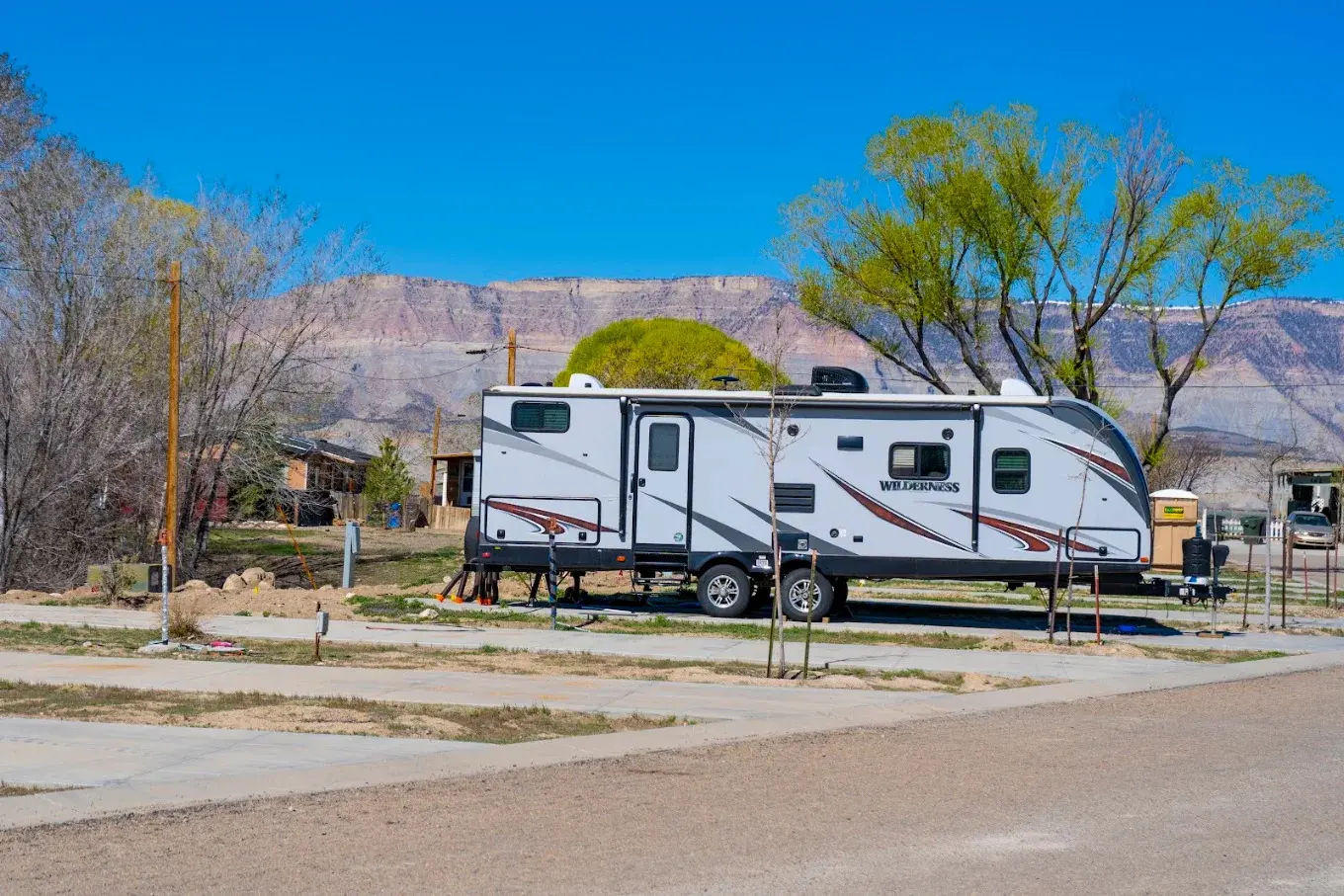
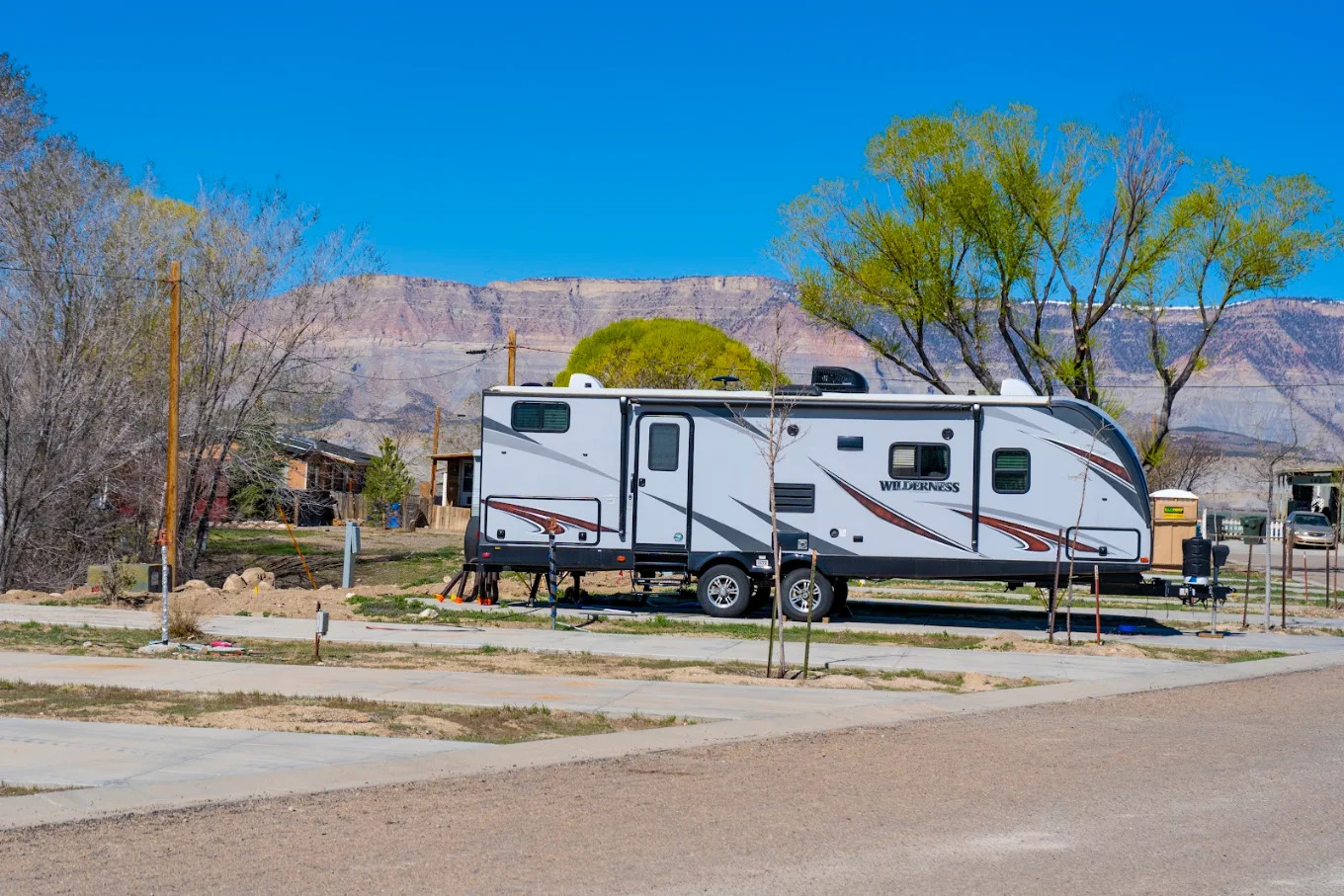
A long-term RV park rents sites by the month or the season instead of by the night. No single cutoff makes a stay long-term. Each park sets its own minimum and maximum stay, and local ordinances or state laws may add separate occupancy rules. A monthly rate is a flat price for one month on a site, and what it covers depends on the park. Some parks include electric in that price, while others meter it and bill you separately. Some long-term parks also ask for more paperwork than a nightly park does. One California resort, for example, asks for proof of insurance, runs a background check, and requires every RV to stay mobile. Another park may ask for less or for more. Before you book, confirm the minimum and maximum stay, the full monthly cost, the agreement you will sign, and any local rules that apply to your plans.
Introduction
Search for long term RV parks and you will find plenty of lists. What you won’t find is a clear picture of how these parks actually work. How long is long-term? Why does one park quote a flat monthly price while another bills electric by the meter? And why might a park that welcomes you for a month ask you to leave in month seven?
A long-term stay isn’t a longer weekend. A weekend guest pays, parks, and leaves. A long-term guest sets up a routine and builds a budget around one monthly number. When the park changes a rule, it changes daily life.
These parks also sit between two worlds. The home has wheels, so the place feels like a campground. The stay runs for months and the terms go in writing, so it starts to look like a rental. That mix brings rules a weekend traveler may never meet, such as stay caps, background checks, and local codes that count your days.
Below, you’ll find what counts as long-term, how monthly rates are built, which rules to expect, and what a 30-day stay does and does not mean in law. Every park writes its own terms, so the examples here show how real documents read. They don’t describe every park. Use them to build better questions, and recheck rates and rules before each stay through 2030.
What Counts as Long-Term at an RV Park?
A stay counts as long-term when the park’s own policy says so, and local law can add limits of its own. No national cutoff applies to every park.
Nightly, Weekly, Monthly, and Seasonal Stays
Parks sell time in blocks. A nightly stay covers one night, a weekly stay covers seven, and a monthly stay covers one month at a flat price. A seasonal stay covers a longer stretch, such as a winter. In practice, long-term means the monthly and seasonal blocks.
Not every park sells all four, so check which ones apply to the site you want and what the park counts as a month.
Why Some Parks Cap How Long You Can Stay
A cap is one policy worth looking for. One California resort lets monthly guests stay up to six consecutive 30-day periods, then requires them to leave for at least seven days. If a guest stays past the sixth period, the same agreement says the monthly rate converts to a daily or weekly rate.
Those are that resort’s own policies, not standard rules for all RV parks. Before booking elsewhere, ask whether the park has a maximum stay, a required break between stays, or a rate change after a set time.
How a Town Can Define It Differently
Local codes add a second layer. The town code of Hatch, Utah, for example, separates RV stays into temporary living (under 30 days at a time), seasonal use (up to six months in a calendar year), and permanent living (more than 30 days in any 60-day period).
Those definitions apply in Hatch. They don’t set the legal status of an RV stay in another town or state, and they don’t describe Castle Dale, where Esquire Estates sits. The website that hosts the code also warns that it may not show the latest changes, so check with the town for anything that matters. Always look up the rules for the exact place where you plan to stay.
How Do Long-Term RV Park Rates Work?
A long-term rate is a flat price for a block of time, usually a month. The park decides what that price covers, and that’s where parks differ most.
What a Monthly Rate Can Cover
Monthly rates bundle services in different ways. One operator of 34 parks says its monthly rates cover the site, water, sewer at full-hookup sites, and trash. That is one operator’s setup, not an industry standard, so read the written rate details for any park you are considering.
A rate also comes with conditions. The California resort’s agreement requires monthly rates to be paid in advance, or the guest moves to the daily rate, and lets the resort change monthly rates without notice. Ask any park whether your quoted rate is fixed for your whole stay.
How Electric Is Billed
Some parks include electric in the monthly rate. Others meter it and bill you on top. The operator above says electric is often metered separately for its monthly guests.
If your park meters power, ask how it calculates the charge, when the bill arrives, and whether a deposit applies. Heavy air conditioning or electric heat can swing the total, so ask for an estimate for your RV setup. A park with lower rent and metered electric can cost more each month than one with higher rent that includes it, so compare totals instead of headline rates.
This guide doesn’t quote a typical price range. Rates vary by region, season, and what’s included, and a made-up average would only mislead you.
Money Due Before, During, and After Your Stay
Look past the monthly rate to the one-time charges. A park might charge a screening fee, a deposit, a cancellation fee, or a final utility bill. Not every park charges all of these, so ask which ones apply to your agreement.
The California resort gives one example. Its agreement charges a non-refundable $50 processing fee for each adult to run a background check, adds $60 a month for each extra vehicle, and asks for 30 days’ notice of any change or early departure. Another park may handle each of these differently, or not charge them at all.
What Rules Do Long-Term RV Parks Have?
Long-term parks put their rules in writing, and the rules cover money, people, and the RV itself. The California resort’s monthly agreement shows how detailed that can get. Its terms require proof of RV registration and insurance two weeks before arrival, run background and eviction checks, require the RV to stay mobile, ban subletting, and treat the first 30 nights as a probation period.
Other parks set other rules, such as limits on RV age or size, pets, guests, and quiet hours. Read the full rules before you pay a deposit.
What Happens When You Apply for a Monthly RV Site?
The process differs from park to park. The same California resort shows one version. A guest sends a signed rules packet with RV registration and insurance at least two weeks before arrival, and pays daily rates until the background and eviction checks are approved. Management then decides whether to approve the guest. Another park may need fewer steps or more. Before you drive anywhere, ask when to apply, whether the park approves your RV first, when payment is due, and what happens if your dates aren’t open.
Does Staying 30 Days Make You a Tenant?
Not automatically. Staying 30 days doesn’t create one legal status across all RV parks. The rules depend on the location, the type of accommodation, the occupancy arrangement, and state and local law. A park’s agreement matters, but its wording doesn’t replace the law.
The number 30 does appear in specific places, such as Hatch’s definitions and the California resort’s billing periods. Each is a local rule, not a trigger that works everywhere.
State law adds another layer, and it usually speaks about particular kinds of homes. Utah’s Mobile Home Park Residency Act, for instance, defines a resident as someone who leases or rents space in a mobile home park. The act is written around mobile homes and mobile home spaces. Whether it reaches an RV site is a legal question that depends on the place and the facts.
Important: A 30-day stay does not automatically give every RV guest the same legal status. Rules depend on the location, applicable law, and the occupancy arrangement.
So how do you protect yourself? Ask how the park classifies long-term guests, whether you will sign a rental agreement or a guest registration, and which law or code it follows. Get the answers in writing and keep a copy of everything you sign. If a dispute comes up, a local attorney or your state’s housing or consumer office can tell you which rules apply. This is general information, not legal advice.
How Is a Long-Term RV Park Different From a Mobile Home Park?
The main difference is what sits on the space. Hatch’s code describes an RV as a portable unit on wheels built to travel and designed for human habitation, and a mobile home as a structure designed to be used as a dwelling.
| Question | Long-term RV park | Mobile home park |
| What occupies the space? | An RV built for road travel | A mobile home that meets the legal definition where it sits |
| How is the space rented? | Terms and billing vary by park | Terms and billing vary by park and place |
| Which law applies? | Depends on the location and arrangement | May fall under specific mobile home park law |
Utah offers one example of that last row. Its act defines a mobile home park as land where two or more mobile home spaces are leased or offered for rent to hold mobile homes for residential purposes.
Some parks offer both. Esquire Estates rents long-term RV sites and mobile home lots, with monthly rates for each. If you own a mobile home and plan to settle in, a lot may fit. If you live in your RV, or you expect to move on, an RV site fits better.
Who Stays at Long-Term RV Parks?
People with a reason to stay a while. Near Castle Dale, Utah, many residents work locally in the region’s power and mining industries, and Esquire Estates describes its long-term sites as a fit for miners, power plant employees, remote workers, and long-term travelers.
Those groups want different things. A crew on a short job may want a simple agreement, a remote worker may care most about Wi-Fi, and a traveler may want room to move on when the season ends. Knowing which one you are tells you which terms matter most.
How Do You Find and Compare Long-Term RV Parks Near You?
Search for monthly or long-term RV parks near the place you will work or stay. Check each park’s website for monthly rates, then call, because posted rates can change. Ask the office to email the monthly agreement and the park rules before you send any money, and ask every park the same questions.
| What to compare | What to confirm |
| Monthly rate | Total price and what is included |
| Utilities | Electric billing, water, sewer, and other charges |
| Stay limits | Minimum, maximum, and renewal terms |
| Agreement | Notice, cancellation, and early-departure rules |
| RV eligibility | Age, dimensions, and approval requirements |
| Everyday rules | Pets, guests, parking, and quiet hours |
| Local requirements | Whether your planned stay is allowed |
Daily life matters over several months, too. Ask about mail and packages, laundry, extra vehicle parking, guest access, trash pickup, and the distance to a grocery store and clinic. Services vary by park.
Watch for warning signs, too. Unclear pricing, promises made only by phone, utility charges nobody can explain, missing cancellation terms, and a refusal to explain site restrictions all deserve a pause. They aren’t proof of bad intent, but they are good reasons to ask for answers in writing.
What Does Long-Term Look Like at Esquire Estates?
Esquire Estates sits at 425 120 W, Castle Dale, UT 84513. The park offers full hookup long-term RV sites with 30-amp and 50-amp power, level pads, Wi-Fi, a community clubhouse, showers, and an on-site propane dispenser. It is open year-round, and the office is open every day from 9 a.m. to 4 p.m.
Monthly full hookup RV sites start at $585, with electric included and taxes not included. The same page lists nightly sites from $50. For illustration, 30 nights at the advertised starting nightly rate would total $1,500 before tax. The published starting monthly rate is $585 before tax, a difference of $915 when you compare those two starting figures. That is arithmetic, not a guaranteed saving for the same site or dates.
Important: Rates are subject to change. Confirm current pricing, availability, taxes, and the terms for your intended stay directly with the park.
Electric is part of that published monthly rate, which keeps the budget simple. The park also posts rules worth comparing with any other park. It sets a 15-year RV age limit and allows no more than two pets per RV, and it requires guests to register all members of their party before arrival and sets quiet hours from 10 p.m. to 8 a.m. If your RV is older, contact the park about a possible exception before you reserve.
To ask about availability or the monthly agreement, call 435 749 4920, or read more about the full-hookup RV sites first.
Conclusion
Start with three decisions. First, decide how long you plan to stay, because that shapes which rate and rules apply. Second, get the total monthly cost in writing, including electric, taxes, and fees. Third, read the monthly agreement and the park rules before you pay, and check the local rules for the place you will stay.
Frequently Asked Questions
What is considered a long-term stay at an RV park?
No single cutoff applies everywhere. Parks set their own minimum and maximum stays, and local codes may define terms such as seasonal use or permanent living in different ways. Some specific policies and codes use 30 days, but that is a local choice, not a national rule.
How much do long-term RV parks cost?
Prices vary by park, region, and what the rate includes, so no single number fits. Ask for the full monthly cost. At Esquire Estates, monthly full hookup RV sites start at $585, with electric included and taxes not included, and rates can change.
Is electric included in monthly RV park rates?
At some parks it is, and at others the park meters it and bills you on top, so ask how yours works. Esquire Estates’ published monthly rate includes electric.
Can you live in an RV park year-round?
Some parks allow it, but not all of them. Parks set their own stay limits, and local codes may restrict how long an RV can be occupied. Confirm the park is open year-round and read the local rules. Esquire Estates is open year-round, and you can call the office to confirm how long you can stay.
Do long-term RV parks require a lease?
Parks don’t all use the same document. Some use a written month-to-month agreement, as the California resort in this guide does, and others use a guest registration. Read whatever you sign before you pay, and keep a copy.
What is the difference between a long-term RV park and a mobile home park?
An RV park rents space for vehicles built to travel, while a mobile home park rents lots for mobile homes built as dwellings. Terms vary by park and by place, and some states, such as Utah, have a specific law for mobile home parks. Whether such a law reaches an RV site depends on the location and the arrangement.
Further Reading
What to Check Before Choosing a Long-Term RV Park walks through 12 checks to run before you commit to a park.