Start by comparing the total cost of your stay for the same dates, not the lowest advertised rate. A park with a low monthly rate can cost more once electric, deposits, taxes, and fees are added. Call two or three parks near you, ask what each rate includes, and get an itemized quote in writing before you pay.
Introduction
Searching for cheap long-term RV parks near you can produce plenty of options, but comparing their advertised rates is not always straightforward. One park may include electricity, while another charges for it separately. Some rates exclude taxes or other fees, and a park that looks affordable may not accept your RV.
That gap can lead to unexpected costs. A rate posted on a listing site may be old. A price that looks small may leave out electric, taxes, or a deposit.
This guide does not rank parks or give a list of prices, because rates change and no list stays right for long. It gives you a repeatable way to find, verify, and compare parks, and to check the conditions that affect your decision before you pay.
Start with two or three parks, ask each the same questions, and compare their written quotes for the dates you need.
What Does Cheap Mean for a Long Stay?
For a long stay, cheap should mean the lowest total cost for the kind of stay you need. The lowest advertised rate is only the first number you see.
Total Cost, Not Posted Rate
A posted rate is what the park puts on its sign or website. Your total is what leaves your bank account over the stay. It includes the rate, plus anything the rate does not cover, such as metered electric, taxes, and fees.
Here is how a lower rate can still cost more. Say Park A quotes a lower monthly rate but meters electric, and Park B quotes a higher rate with electric included. Park A comes out ahead only if its electric bill stays below the gap between the two rates. In a very hot or cold month, it may not.
If electric is metered, ask how the charge is calculated and whether any service fee applies. Ask whether the park can share a typical bill for a similar RV in the same season. Treat that bill as an estimate, not a promise, because your own use depends on your RV, your appliances, the weather, and your thermostat settings.
The Right Kind of Rate
Many parks list a nightly, a weekly, and a monthly rate. These are different prices for different stays, and “monthly” does not mean the same thing everywhere. Ask these questions about any monthly rate.
- What dates does the monthly rate cover?
- Does it renew on its own, and is the next month charged in advance?
- What happens if you arrive late or leave early?
- Does the rate require a minimum commitment?
Where Do You Look for Cheap RV Parks Near You?
Look in several places, then confirm each one with the park. No single source is complete or current.
Park Websites
A park’s own website is a good starting point, because the park controls it. Look for a rates page, a rules page, and an FAQ. Even an official page may not show a recent change, so confirm what you read directly.
Map Searches
A map search shows what is near you. Read each park’s own listing, and look at its photos and hours. A map can show a park that closed or changed owners, so treat it as a lead and not a fact.
Listing and Review Sites
Listing sites can help you find parks you did not know about. Their rates and amenities may be old, because someone has to update them. Use them to build a short list, then check each park directly.
The Phone Call
Calling the park helps you confirm the current rate and any charges that are not listed online. Say what kind of RV you have, give your arrival date and how long you plan to stay, and ask for the total.
Then ask for a written, itemized quote for your exact dates. It should show the site charge, included utilities, extra charges, the deposit, payment deadlines, and cancellation terms. Before you pay, read the park’s reservation agreement or other terms and make sure they match what you were told. Keep a copy of both the quote and the final agreement.
You can also ask about better rates in a neutral way: “I’m comparing sites for these dates and expect to stay this long. Is this your best rate for that period, and are there any longer-stay or off-season rates?” A park may or may not have one, so treat the answer as information, not a promise.
Why Can a Low Rate Cost More?
A low rate can cost more because the rate may not include everything. These are places where extra charges can appear. Not every park charges all of them, so ask about each one.
- Electric. Some parks include it. Others meter it, so your bill rises and falls with the weather and how much you run the heater or air conditioner.
- Taxes. A quoted rate may leave taxes out.
- Deposits. Some parks ask for money up front. Ask whether it is refundable and when.
- Application or setup fees. A long-term stay may come with paperwork and a fee.
- Extra people, pets, or vehicles. Some parks charge for them or limit them.
- Water, sewer, and trash. These are sometimes included and sometimes billed.
- Wi-Fi and other services. An amenity listed on a website may not be fast enough for your needs or may cost extra.
You do not have to find a fee-free park. You need to know the full list before you compare.
A Worksheet for Comparing Parks
Fill this in for each park you are considering, using the same dates and length of stay.
| Item | Park A | Park B | Park C |
| Rate and billing period | |||
| Electric and other utilities | |||
| Taxes and recurring fees | |||
| Deposit, and is it refundable? | |||
| Other required charges | |||
| Total for the same dates | |||
| Cancellation and early departure | |||
| RV eligibility and site fit | |||
| Written quote received? |
Keep a refundable deposit separate from the cost you expect to pay, but remember it is cash you need up front. Our companion long-term RV park checklist covers 12 more things to confirm.
How Do You Tell Real Value From a Low Rate?
Real value is a fair total for a stay that works for you. Use the same six questions for each park so you can compare the answers fairly.
- What does the rate include? Get a plain list: electric, water, sewer, trash, Wi-Fi, and taxes.
- What is the minimum stay? A monthly rate may require a certain length. Make sure your dates fit.
- Which charges are fixed? A rate may be fixed for a period while utilities or other charges can change. Ask which is which, and what written terms cover any change.
- What are the refund and cancellation terms? Know what happens if you leave early or change your plans before you arrive.
- Will my RV fit? Check site length and any limits on the age or type of RV. A site that does not fit your rig is not a bargain at any price.
- What are the rules? Read the rules on quiet hours, guests, pets, and extra vehicles. You will live with them every day.
If the park cannot explain the terms clearly, do not pay until your questions are answered.
What If You Only Need a Few Months?
A short long-term stay can be harder to price than a full year. Some parks set a minimum stay for the monthly rate. Others offer a weekly rate that may suit a stay of a few weeks. Ask which rate applies to your dates, and whether the park can adjust if your plans change.
Also ask what happens at the end. Can you extend? Is notice required on either side? A monthly stay is not automatically the best deal if you need only a few weeks.
What Do You Give Up at a Lower Price?
A lower rate may be worth a trade-off, provided you know about it before booking. Ask about these.
- Distance. A park farther from town may cost less. Add the cost of fuel and time for each trip.
- Site details. Ask for the exact site’s dimensions, where the hookups sit, the access road, and slide-out clearance.
- Amenities. A park may have a clubhouse, laundry, or showers, or it may have none. Ask what is available and what it costs.
- Rules about the RV. Some parks set an age limit for RVs. Ask before you drive over.
- Daily practicalities. Ask about mail and packages, trash pickup, seasonal limits, and who to call after hours.
A site can be inexpensive and still be a poor fit for several months. Ask about the practical details before you decide.
What Are the Red Flags and the Good Signs?
Some patterns show up again and again. The table pairs each warning sign with what a good answer looks like.
| Red flag | Good sign |
| A rate with no terms listed | A rates page that says what is included and what is not |
| The park will not document the quote | An itemized written quote for your dates |
| Pressure to pay a deposit today | Time to read the rules and decide |
| “Electric is extra” with no details | A clear explanation of how electric is billed |
| No answer on refunds or cancellation | Written refund and cancellation terms |
| Rates that differ between the website and the phone | The same rate in both places, with the date |
| A payment request that does not match the park’s stated process | Payment details that match the park’s own materials |
One red flag does not mean you should walk away. It means you should ask more questions before you pay. Two or three together, with no good answers, is a better reason to look elsewhere.
Before You Send Money
Confirm who is asking for the payment and that the name matches the park. Confirm that the site you were quoted is actually available. Watch for mismatched names, refusal to put terms in writing, and pressure to pay before your basic questions are answered. If anything feels off, call the park at the number on its official website.
Can You Trust Reviews and Ratings?
Reviews can help you spot problems, but they are not a guarantee. A single glowing review or a single angry one tells you little. Look for patterns across many reviews, and look at the dates. Notice how the park replies when a guest raises a problem, such as a surprise charge or a slow repair. A calm, specific reply tells you more than a star count.
Fake reviews exist. A federal consumer reviews rule took effect on October 21, 2024 and prohibits specified deceptive practices involving reviews, including selling fake reviews. The rule does not mean every suspicious review has been proven fake, so check patterns and corroborate important claims.
Use reviews to decide which parks to call. Then use your own questions and the park’s written terms to decide whether to stay.
How Do You Check a Park Before You Pay?
Before paying, verify the site, the written price, the payment terms, and the cancellation policy.
- Call and ask the six questions above.
- Get the itemized quote in writing.
- Read the reservation agreement and the rules. Do this before you give a deposit.
- Visit if you can. Look at the sites, the roads, and the hookups, and ask to see the exact site you would get. If you cannot visit, ask for recent photos.
- Fill in the worksheet. Compare totals for the same dates.
- Keep a copy of what you agreed to.
What Does Value Look Like at Esquire Estates?
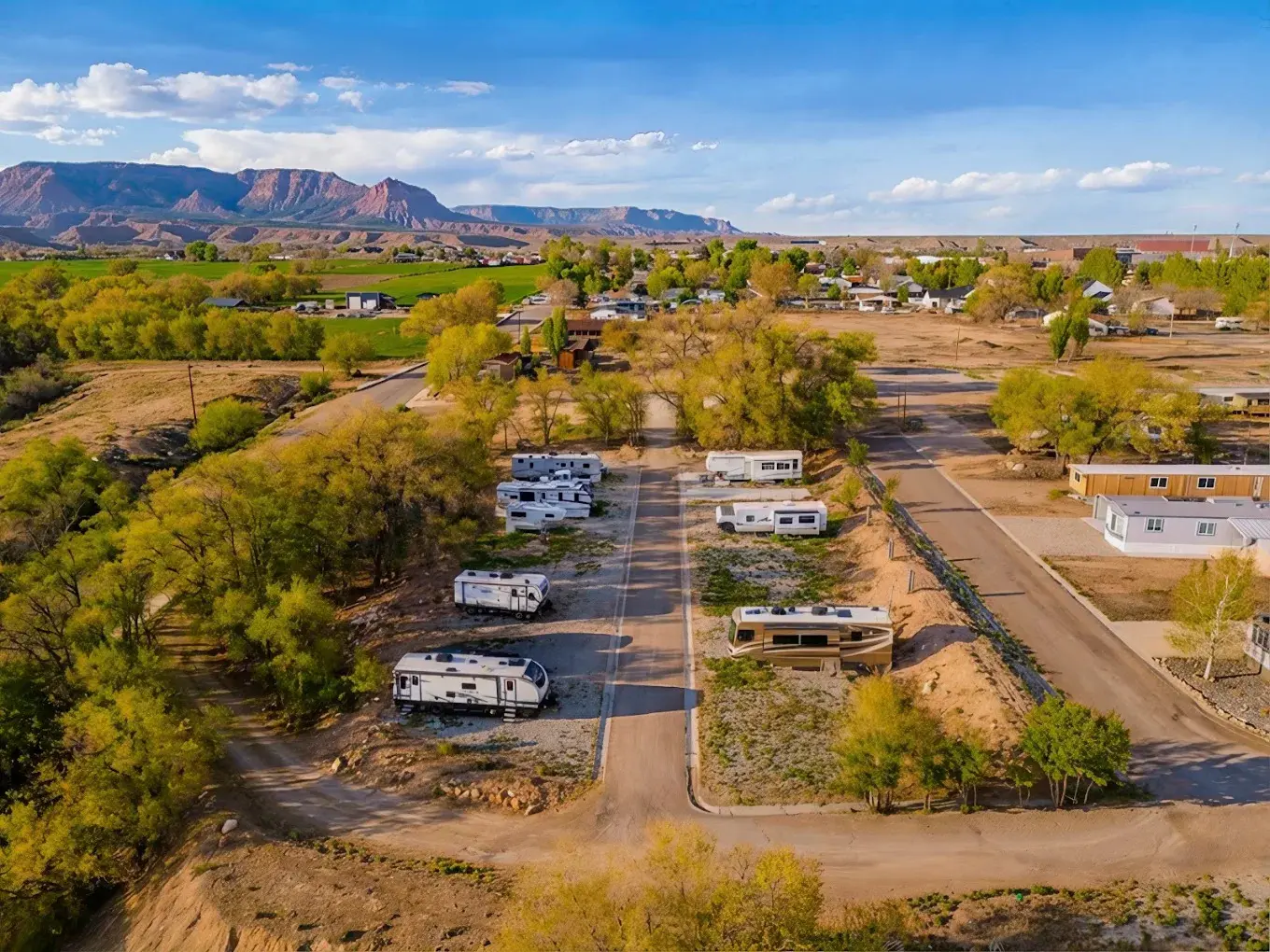
Esquire Estates is an RV park at 425 120 W, Castle Dale, UT 84513. It is one example of a park that publishes its rates and terms, which makes the six questions easier to answer. It is not a recommendation for every reader, since your location and travel plans will decide what fits.
The rates page lists RV sites starting at $50 a night, $300 a week, and $585 a month. It says electric is included, taxes are not included, and rates are subject to change. The full hookup sites have 30/50 amp service, leveled pads, water, and sewer.
Here is how the rate type changes the math. At $300 a week, the cost works out to about $43 a night. At $585 a month, a 30-night stay works out to about $19.50 a night. These per-night figures are simple comparisons of the published starting rates, not a guarantee that every stay qualifies for those prices. Confirm the rate, dates, taxes, availability, and terms with the park.
The FAQ says the park welcomes both short- and long-term guests. The park sets a 15-year RV age limit and a limit of two pets per RV, and the rules describe a 48-hour cancellation policy with no refunds for early departure or no-shows. If your RV is older, ask about an exception before you reserve. You can read more on the full-hookup RV sites page.
Call 435-749-4920 or email [email protected] to confirm availability and terms for your dates.
Conclusion
Finding a cheap long-term RV park near you is mostly about asking the right questions. The posted rate is only a starting point. What matters is the total you pay for a stay that fits your RV and your plans.
Look in more than one place, then confirm with the park. Ask what the rate includes, what the minimum stay is, which charges can change, and what happens if you leave early. Get an itemized quote and compare totals for the same dates.
Clear written terms make it easier to judge whether the price and conditions suit your stay. If a park will not provide them, keep looking.
FAQ
How do you find cheap long-term RV parks near you?
Search park websites and maps, build a short list, and call each park. Ask for the current rate, what it includes, and an itemized quote in writing. Compare the total for your dates.
Are cheap RV parks worth it?
They can be. A lower total with clear terms is good value. A low posted rate with extra fees or rules that do not fit your plans is not. Judge the total and the fit, not the headline.
What fees do RV parks add to the rate?
Common ones include metered electric, taxes, deposits, application fees, and charges for extra guests, pets, or vehicles. Not every park charges all of them, so ask each park for a full list.
Is a monthly rate cheaper than a weekly rate?
It can be, but check the terms. At Esquire Estates, the listed starting rates are $300 a week and $585 a month, so the monthly rate costs less per night for a long stay if it applies to your dates. Other parks set their own rates and rules.
How do you spot hidden fees?
Ask for an itemized written quote that lists every charge, including taxes, electric, and deposits. If a park will not itemize its charges, ask more questions before you pay.
What should you ask before you pay?
Ask what the rate includes, the minimum stay, which charges are fixed, the refund and cancellation terms, whether your RV fits, and what the rules are. The checklist in Further Reading lists 12 more things to verify.
Further Reading
What to Check Before Choosing a Long-Term RV Park walks through 12 checks to run before you commit to a park.