
Camper lot rent pays for a place to park your RV, but it does not automatically cover every utility. “Full hookups” usually means electricity, water and sewer at the site, yet WiFi, propane, taxes and power charges may be handled separately. Before you book, confirm the total cost and make sure the assigned site fits your whole setup, not only the RV.
Introduction
Search for camper lots for rent near me and you will find two lots with the same monthly rent but very different value. One may include electricity, water and sewer. Another may bill power on top or offer only some of those connections. “Full hookups,” “big-rig friendly” and “utilities included” all sound clear until you ask what they cover at that lot.
The phrase “all-in” can be just as vague. Ask which utilities, taxes and fees it includes, then request the full cost in writing.
Space matters as much as price. A long motorhome, fifth wheel or travel trailer needs room to park, extend its slide-outs and reach the connections. The entrance road and the turns must work for your rig too, and you learn that at the gate unless you ask first.
Your town and your dates decide which lots are open, so use this article as a checklist for each lot you find. It explains what the terms mean, what the rent can leave out, and how to turn “big-rig friendly” into numbers you can check.
What Is a Camper Lot?
A camper lot is a space rented for parking and using a camper, trailer or RV, often for a month or longer. Depending on the park and the rental terms, the lot may include utility connections and other amenities. Check the listing and the agreement to see exactly what is provided. You do not own the land, and the park or the owner keeps control of how it is used.
Camper, RV and trailer lots: same space, different words
Park owners, listing sites and renters all use “camper lot,” “RV lot,” “trailer lot” and “RV space” for the same kind of rental. The word does not change what you get. The hookups, the rules and the lease do. Read each listing for what the space includes, not for what it is called.
Lot or site: why listings mix the terms
Some parks say “site” for a nightly stay and “lot” for a longer one. Others use the words as if they were the same thing. There is no fixed rule, so check the rental period in each listing. A monthly “site” and a monthly “lot” may be the same rental.
What Does Full Hookup Mean?
A full-hookup site gives your RV three connections: electricity, water and sewer. With all three available, you can use your RV’s electrical, water and waste systems at the site, subject to the service the park supplies and your RV’s own needs.
Some lots do not offer all three. A partial-hookup site usually gives you electricity and water but no sewer, and you dump waste at a shared station or use a portable tank. Setups vary, so confirm what a lot really has. A site with no hookups is sometimes called primitive, though parks may use other names. There you depend on your own tanks and batteries. None of these is wrong. They suit different RVs and different stays.
Water, sewer and electric
Each connection has its own question to ask.
- Water: A water hookup alone does not tell you the water is safe to drink. Ask whether the site supplies potable water and whether any advisories or restrictions apply. Ask about pressure and who to call if the supply stops.
- Sewer: Ask whether the connection sits at your pad or whether you must use a dump station.
- Electric: Ask what service the lot has, and whether the pedestal matches your plug.
30-amp or 50-amp
Campsites typically offer 30- or 50-amp service, and RVs come with a 30-amp or 50-amp cord. Some pedestals offer both. Know your RV’s plug before you call, and ask about the exact lot you would rent, not the park in general. Ask four things:
- Does this lot have the outlet my RV needs?
- Can the park confirm the outlet type and the service available?
- Are there site-specific limits or known power problems?
- What happens if the pedestal fails during my stay?
Some RVs can connect to a different outlet with a compatible adapter, but the available power stays limited by the supply. An adapter does not turn 30-amp service into 50-amp service. Confirm compatibility with your RV maker or a qualified RV electrician, and never force a connection or use damaged equipment.
Sewer at the lot or a dump station
A sewer connection at the lot means your waste drains without a trip. A dump station means you move the waste yourself, or you hire a pump-out service. If the lot has no sewer, ask where the approved dump station is, whether long-term guests may use it, when it is open, and whether any fees or limits apply. If the park uses a septic system, ask whether your lot is connected to it.
What to bring for the hookups
Depending on your RV and the site setup, you may need a surge protector, a water-pressure regulator and a water filter, plus a potable-water hose and a sewer hose. Check your RV maker’s instructions, and ask where the hookups sit on your lot so you know your hoses and cords will reach.
What full hookups do not include
Two things catch renters off guard. WiFi is not guaranteed with a full-hookup site. Many parks offer it, but the signal can be weak. Propane is not included either, though some parks sell it by the gallon. If you work online or heat with propane, ask about both before you commit.
What Does Lot Rent Cover, and What Costs Extra?
Base rent is the price of the space. What else it pays for depends on the park. Go through the items below and write down one of three answers for each: included in the rent, billed on top, or not offered. Ask the park office to confirm each answer in writing.
Electric
This item can change your monthly bill a great deal. Some parks include electric in the rent. Others read a meter and bill you for what you use. If power is billed, ask how often the meter is read, what the rate is, and whether the park adds a fee. Get the rate in writing, because it can move the monthly total as much as the rent does.
Water, sewer and trash
Ask whether water and sewer are in the rent or billed. Ask how trash works too. Some lots share a dumpster, and some have pickup. Find out whether trash costs extra, where you take bulky items, and whether the park has rules about what you may leave beside your RV.
WiFi and cable
Park WiFi may be free, paid or missing. If you rely on the internet for work, do not treat park WiFi as your only connection. Ask about the signal at your lot, not only in the office. A phone hotspot makes a useful backup, so check your cell signal during a visit.
Taxes and fees
A listed rent may leave out taxes. Some parks also charge application, setup or late fees. Ask which of these apply, and ask for the total monthly figure with taxes. Propane belongs on this list too if you use it, since full hookups do not cover it.
Put the answers in writing
Phone answers are easy to forget, and staff can change. After you call, send a short message that lists what you heard, such as “electric included, water billed, WiFi not offered,” and ask the office to confirm it. A reply gives you something to point to later. It also shows you quickly whether the park is willing to be specific.
Compare the real monthly cost
Use this worksheet to compare two parks. Write Included, Extra or Not offered for each utility, and keep a refundable deposit out of the monthly total, since it is money you front, not a monthly cost. Not every park charges every item here, so the goal is to find out which ones apply.
| Cost item | Park A | Park B |
| Base monthly rent | ||
| Electric | ||
| Water and sewer | ||
| Trash | ||
| WiFi | ||
| Taxes and recurring fees | ||
| One-time setup or application fees | ||
| Refundable deposit | ||
| Minimum stay and cancellation terms | ||
| Estimated total recurring cost |
Base rent is only part of what a stay costs. The worksheet shows the rest.
Can Your Big Rig Fit the Lot?
“Big-rig friendly” shows up on many listings, but the label does not say what size it covers. One park’s big rig is another park’s average one. Instead of trusting the phrase, turn it into numbers and ask the park to confirm them for your lot.
Length, with the tow vehicle and slide-outs
Measure the RV and any tow vehicle that will stay on the site. A fifth wheel or travel trailer is longer once you add the truck. Then check the usable parking length, the width, the slide-out clearance and the room for the awning and steps. An advertised length may not equal usable length, since a picnic table, a pedestal or landscaping can take up space. Ask for the usable length at the exact site, and confirm that nearby obstacles will not get in the way of setup.
Pad and ground
Ask what the pad is made of. Concrete, gravel and packed dirt all behave differently under a heavy rig. Ask whether the pad is level and whether it stays firm in wet weather. During a visit, look at the surface yourself and check that it is level before you decide.
Power for a big rig
The detailed power questions are in the 30-amp and 50-amp section above. For a big rig, the key point is to ask for the service by lot number, not by park, and to check that the cord reaches the pedestal.
Roads, turns and overhead clearance
The lot is only part of the trip. You also need to get in, turn and back into place. If possible, inspect the entrance and the route to the site before booking, and look for tight turns, low branches, signs and gates. If you cannot visit, ask the park about turns, gate and branch clearance, road surface and access for your rig’s size. Use maps or street view as a first check, not a guarantee.
Back-in or pull-through
A pull-through site lets you drive in and out without backing up. A back-in site needs you to reverse into place. Many listings skip which one a lot is, so ask. If you have a long rig and dislike backing up, this may decide which lot works for you. A park that welcomes big rigs does not necessarily have pull-through sites. If you have never backed into that lot, ask to walk it first, and bring a spotter on arrival day.
What Should You Measure Before You Call?
Take five minutes to fill this in before you phone the park, and keep one copy for each lot you call so you can compare them later.
| Check | Your measurement | What the park confirms |
| Usable parking length | ||
| Full setup length (RV plus tow vehicle) | ||
| Site width | ||
| Height and route clearance | ||
| Slide-out clearance | ||
| Awning and step room | ||
| Hookup positions | ||
| Plug type (30-amp or 50-amp) | ||
| Space for a second vehicle | ||
| Back-in or pull-through |
What Should You Confirm Before You Book?
- The dates and length of your stay.
- The exact site, or site type, the park is offering.
- The hookups, costs and rules, in writing.
- The minimum stay, deposit and cancellation terms.
- The dimensions of your assigned site, if your rig is close to the limit.
What Do Camper Lots Look Like at Esquire Estates?
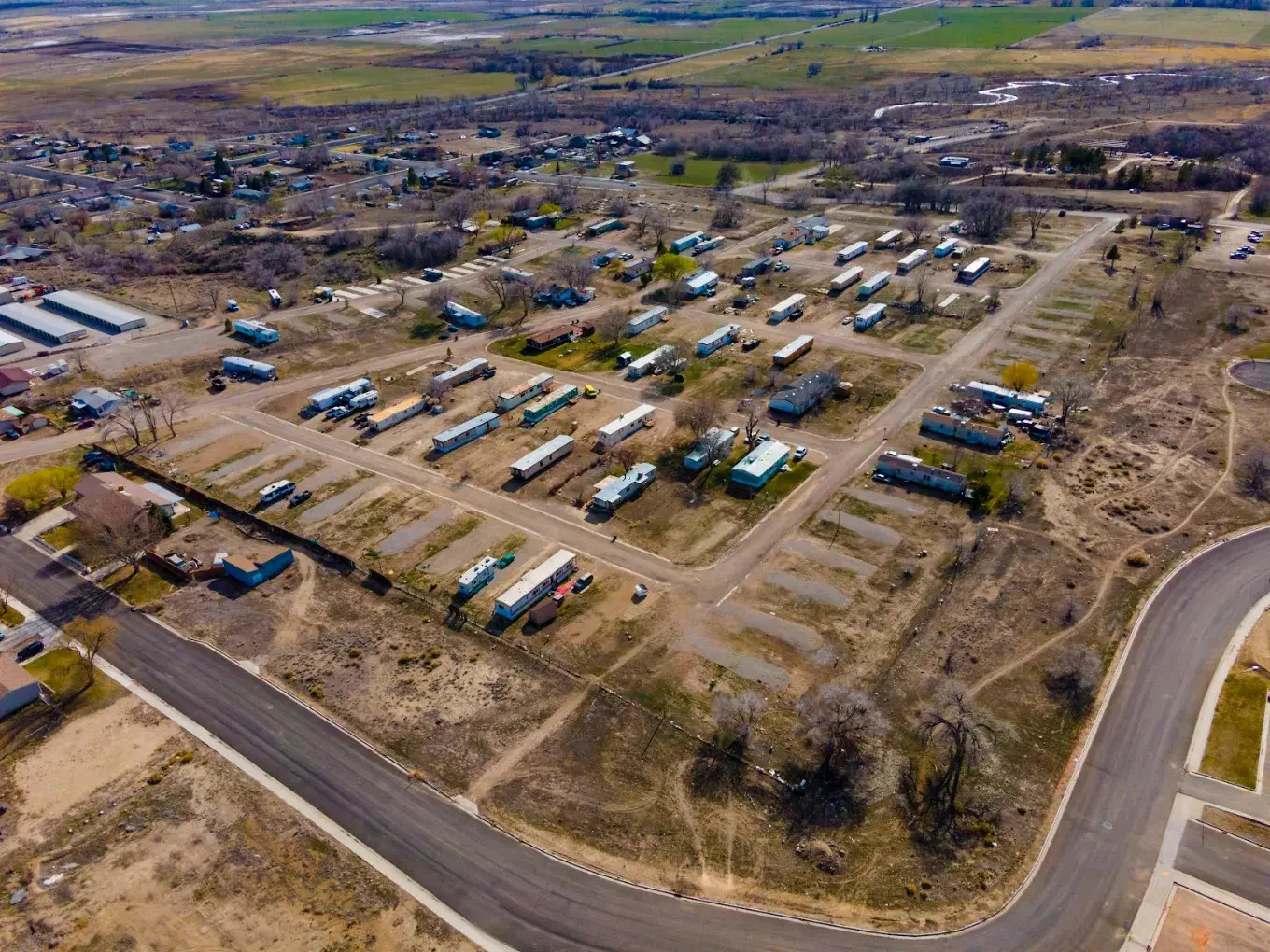
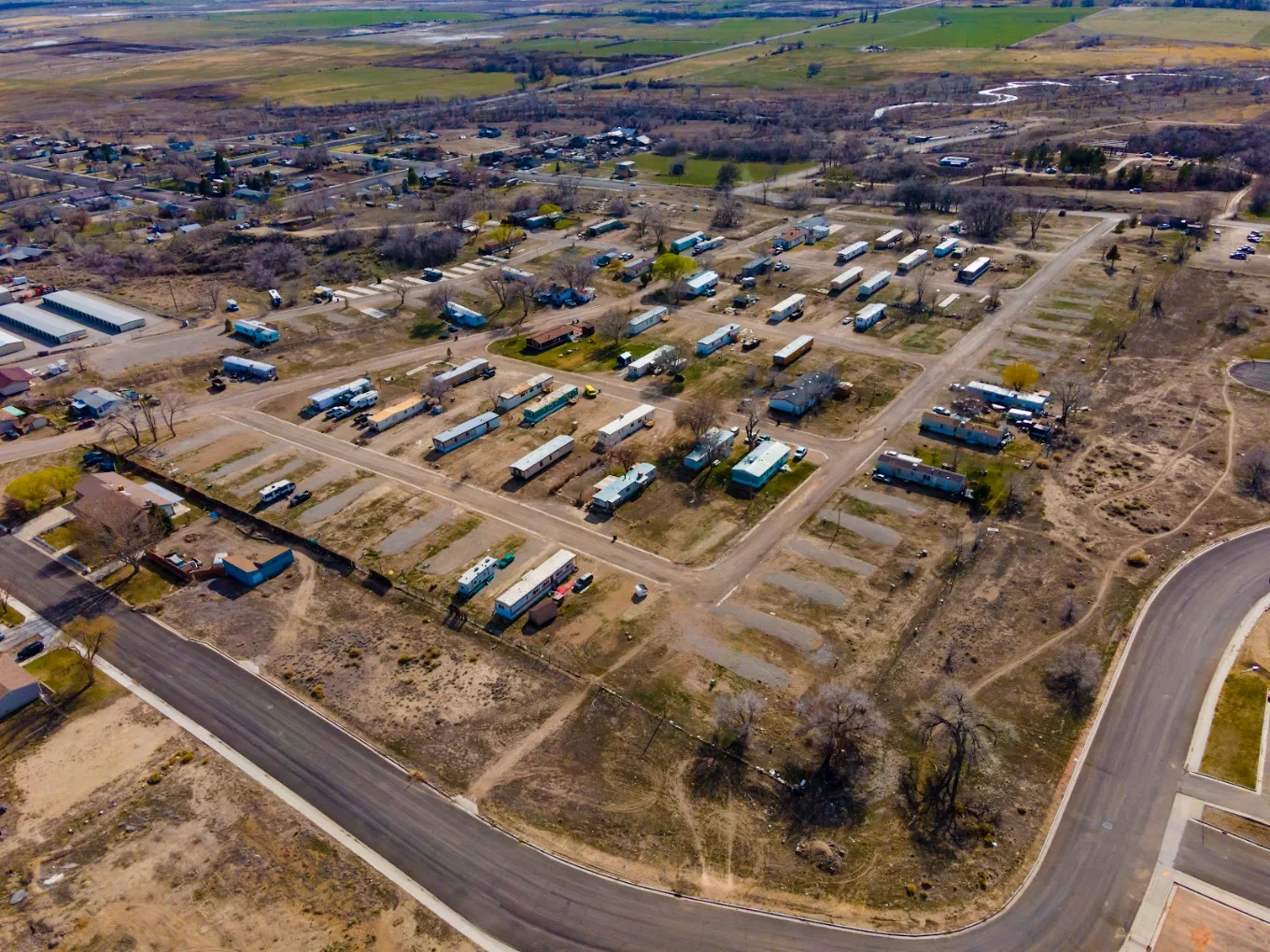
Esquire Estates Mobile Home and RV Park sits at 425 120 W, Castle Dale, UT 84513. Here is what the park publishes about its lots, set against the questions above.
On hookups, the full-hookup page lists 30- and 50-amp power, water and sewer hookups, and level concrete pads at back-in sites. It also lists park-wide WiFi and a propane dispenser. The page calls the park big-rig friendly, but it does not give a maximum rig length. The long-term sites page adds a picnic table, parking and sites that are spacious enough for larger RVs.
On cost, the rates page currently lists monthly full-hookup RV sites starting at $585 a month. It says electric is included, taxes are not included, and rates are subject to change. Under the three-answer check from earlier, electric lands in the “included” column, and taxes land in “billed on top.”
On rules, the support page sets an RV age limit of 15 years and asks guests to contact the park about a possible exception before they reserve. It also allows up to two pets per RV on a leash.
So the published pages cover the starting price, the hookups, the listed amenities and the main rules. They do not state site lengths or pull-through sites, so the exact site dimensions, your site assignment and any booking terms still need an answer from the office. You can reach the park through the contact page.
Conclusion
Before you book, confirm the total cost, the utilities available at your site and the space your complete setup needs. Keep the park’s answers in writing, especially if your RV is close to the site’s size limits.
FAQ
Do camper lots for rent come with full hookups?
Some do and some do not. A full-hookup lot usually has electricity, water and sewer at the site. Other lots offer partial hookups or none. Check the listing, and ask the office to confirm what your exact lot has.
What is the difference between full and partial hookups?
Full hookups include electricity, water and sewer. Partial hookups usually include electricity and water but no sewer, so you dump waste at a shared station or use a portable tank.
Is electric included in lot rent?
It depends on the park. Some include it and some bill it separately. Esquire Estates says on its rates page that electric is included in its listed rates and taxes are not. Ask any park how it handles electric before you sign.
Is WiFi included with a camper lot?
It is not guaranteed. WiFi is not part of a full-hookup site, and the signal can be weak. Ask the park whether WiFi is offered, whether it costs extra, and how well it works at your lot.
What does “big-rig friendly” mean?
Listings use the phrase without saying what size it covers. Ask the park for the lot length, the width between neighbors, the power service, and the route in. Then compare those numbers with your own measurements.
Can I rent a camper lot with no hookups?
Yes, if a park offers lots without hookups. Such a site is sometimes called primitive, and you depend on your own tanks and batteries. Ask how you would handle water, waste and power before you choose one.