Quick Answer
Camping near Castle Dale means the Manti Division of Manti-La Sal National Forest, on the Wasatch Plateau, not the La Sal Division near Moab, which sits more than 100 miles away. The closest developed campgrounds sit along the Huntington Canyon Scenic Byway and around Joe’s Valley Reservoir.
- Confirm you want the Manti Division near Huntington Canyon and Joe’s Valley, not the La Sal Division near Moab or Monticello.
- Pick a developed campground, such as Joe’s Valley Reservoir or one of the Huntington Canyon sites, or choose a dispersed spot on forest roads.
- Check each campground’s reservation status on Recreation.gov, since this varies by site and by season.
- Check current fire restrictions and closure orders with the Ferron Ranger District before you leave home.
- Bring your own drinking water as a backup. It varies by campground, covered below.
Introduction
The Manti Division and the La Sal Division serve very different roles inside one national forest. Manti-La Sal National Forest covers 1,413,111 acres stretching from central Utah into southeastern Utah and a small piece of Colorado, and the Forest Service manages it as three separate land areas: the Manti Division, the La Sal Division at Moab, and the La Sal Division at Monticello. Most articles about “Manti-La Sal camping” blend all three together, which works fine for someone headed to Moab but leaves out anyone staying in Emery County.
For a camper based in Castle Dale, the forest that matters is the Manti Division, on top of the Wasatch Plateau directly west of town. This is the stretch of mountains that feeds Huntington Creek, holds Joe’s Valley Reservoir, and carries the Huntington Canyon Scenic Byway across the plateau at elevations above 10,000 feet.
What makes this pocket of the forest worth the drive is how much sits within a short radius: a reservoir for fishing and boating, a dedicated OHV trail system, and well-known bouldering, all in the same trip. The forest supports elk, mule deer, black bears, and mountain lions across its aspen groves and subalpine meadows.
This guide covers the campgrounds, fees, and rules that apply specifically to the Huntington Canyon and Joe’s Valley area near Castle Dale, along with current fire and closure information. If you are set on the La Sal Mountains near Moab, most of what follows will not apply to your trip.
Where Is Manti-La Sal Camping Near Castle Dale?
The confusion around this forest comes from its name. Manti and La Sal started as two separate national forests roughly a century ago before the Forest Service combined them into one administrative unit. The Manti Division sits on the Wasatch Plateau in central Utah, while both La Sal Divisions sit far to the southeast, near Moab and Monticello, closer to Arches and Canyonlands National Parks than to Castle Dale.
The Forest Service identifies the Miller Flat, Joe’s Valley, and Huntington Canyon area as the most popular recreation zone on the Wasatch Plateau, naming Huntington and Orangeville as the closest communities. Esquire Estates’ own local pages confirm the practical drive times from Castle Dale: Joe’s Valley sits about 15 minutes west of the park, and Huntington, the gateway to the canyon byway, is about 20 minutes north.
Two access routes matter here. Joe’s Valley Reservoir sits west of Orangeville on State Route 29. The Huntington Canyon Scenic Byway, Utah Highway 31, climbs west out of Huntington and strings together most developed campgrounds on this side of the plateau. Both are paved lower down, though side roads to individual campgrounds turn to gravel or dirt.
Which Campground Should You Choose?
- Easiest access from Castle Dale: Joe’s Valley Reservoir, about 15 minutes away.
- Camping with a group: Old Folks Flat or Big Rock Group, both with dedicated group sites.
- Creek access and fishing: Bridges Campground or Forks of Huntington, both directly on Huntington Creek.
- Privacy and no fees: dispersed camping on forest roads outside developed sites.
- Full hookups instead of primitive camping: Esquire Estates in Castle Dale.
What Are the Best Campgrounds Along Huntington Canyon and Joe’s Valley?
The table below lists what current Forest Service and Recreation.gov listings confirm as of this writing. Check the specific campground’s listing on Recreation.gov before you book, since facility status and reservation rules can change.
| Campground | Elevation | Water | Toilets | Reservations |
| Joe’s Valley Reservoir | ~7,000 ft | Yes | Vault | Mixed, check current season |
| Old Folks Flat | ~8,600 ft | Yes | Flush | Group sites reservable |
| Big Rock Group | ~7,800 ft | No | Vault | Group site, check current listing |
| Bridges | ~8,700 ft | No | Vault | Check current listing |
| Forks of Huntington | ~7,600 ft | Check current listing | Check current listing | Check current listing |
Joe’s Valley Reservoir Campground
This is the closest developed option to Castle Dale, sitting at about 7,000 feet next to Joe’s Valley Reservoir, with paved roads, a boat ramp, vault toilets, and drinking water. Single sites run $10 a night and double sites run $18 a night. The reservoir supports fishing for cutthroat, rainbow, and trophy splake trout. Nearby, the Joe’s Valley Bouldering Area offers more than 188 documented boulder problems across Straight and Cottonwood Canyons.
Old Folks Flat and Big Rock Group
Heading up Highway 31 into Huntington Canyon, Old Folks Flat Campground sits at 8,600 feet with eight single sites and five group sites holding between 20 and 60 people, plus flush toilets and drinking water. A short distance further, Big Rock Group Campground sits about 20 miles west of Huntington at 7,800 feet, right on Huntington Creek. The Forest Service describes its gravel parking area as providing ample room for RVs of any size, though anyone towing a very long rig should still confirm current site dimensions and turnaround space before committing. There is no drinking water at Big Rock, so bring your own.
Bridges Campground and Forks of Huntington
Further up the canyon, at roughly 8,700 feet, Bridges Campground offers four single sites and one group site along a stretch of Huntington Creek. Some campground listings still describe this stretch as a Blue Ribbon fishery, but Utah’s Division of Wildlife Resources classifies Huntington Creek as a former Blue Ribbon fishery, degraded by the 2012 Seeley Fire and still under active habitat recovery work. It remains a real fishing destination, just not currently at the state’s top-tier designation, so check current Utah DWR fishing guidance before planning a dedicated fishing trip. The Left Fork of Huntington Trail and Fish Creek Trail both start nearby. Forks of Huntington Campground sits a little lower, around 7,600 feet, with a similar mix of hiking, biking, and fishing access right off the byway.
Farther Up the Plateau: Cleveland and Gooseberry Reservoirs
Cleveland Reservoir and Gooseberry Reservoir Campgrounds sit closer to Fairview than to Huntington, on the western side of the plateau along the Energy Loop. Both work as a longer day trip or overnight stop for anyone driving the full byway, with fishing and boating at each, though neither is the quickest option from Castle Dale.
How Much Does Camping Cost Here?
Developed sites in this part of the forest are inexpensive. Joe’s Valley runs $10 to $18 a night depending on site size. Group sites at campgrounds like Old Folks Flat, Big Rock, and the Joe’s Valley Pavilion charge a flat rate that scales with capacity. Dispersed camping on forest roads outside developed campgrounds costs nothing.
One thing worth knowing before you book: the Forest Service is reviewing a fee change proposal covering roughly 35 recreation sites across Manti-La Sal National Forest. The rates above reflect currently published fees, but confirm them with the Ferron Ranger District or on Recreation.gov if you are planning a trip several months out.
Can You Camp for Free?
Yes, through dispersed camping on eligible forest roads, under a specific set of rules. Dispersed camping is allowed across most of the Manti Division at no cost. The Forest Service’s posted camping and travel rules set the specifics: vehicles cannot go more than 150 feet off an established road unless a site is posted otherwise, the stay limit is 14 days, campers must then move at least 10 miles before setting up again, and equipment cannot be left unattended for more than 72 hours. Campers must also follow whatever fire restrictions are active.
Dispersed sites have no trash service, no potable water, and usually no toilets, so pack out everything you bring in. Roads leading to popular dispersed areas near Joe’s Valley and Huntington Canyon are unpaved in stretches, so a high clearance vehicle is a real advantage.
What Else Can You Do Nearby?
Camping here works well as a base for several activities. The Arapeen OHV Trail System runs 370 miles of maintained routes through the Manti Division, with access from the Reeder Trailhead near Joe’s Valley. As of this writing, Reeder Ridge Road itself is closed through October 9, 2026, due to the Black Canyon Fire burn scar, so check current road status before planning a route through that specific access point.
Anglers have Joe’s Valley Reservoir and a handful of smaller mountain lakes within a short drive, plus Huntington Creek, which is rebuilding toward its earlier fishing reputation. Climbers have Joe’s Valley Bouldering Area, with routes across Straight and Cottonwood Canyons for a range of skill levels. Hikers can pick up the Left Fork of Huntington and Fish Creek trailheads directly from the Huntington Canyon campgrounds.
Want Full Hookups Instead of Primitive Camping?
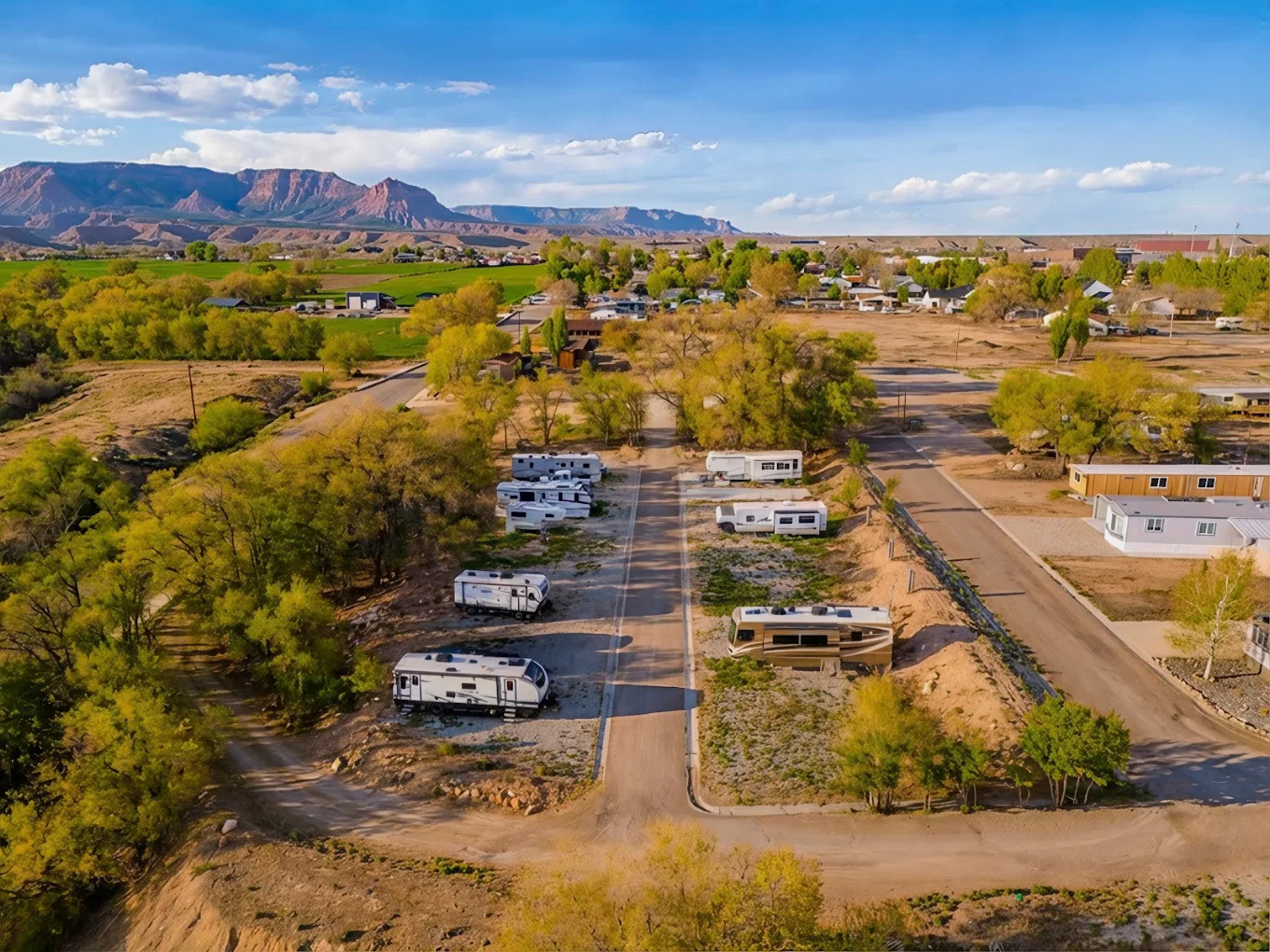
Most sites above have vault toilets, limited or no potable water, and no hookups, which suits plenty of campers but not every night. If you would rather sleep in your own RV with real plumbing, electricity, and a hot shower, Esquire Estates in Castle Dale offers full hookup RV sites with 30 and 50 amp power, about 15 to 20 minutes from Joe’s Valley and Huntington. It also works for splitting a trip between primitive camping and full hookups, or for longer stays tied to local work, through the park’s long-term RV sites.
When Is the Best Time to Camp Here?
It depends on elevation and current fire conditions, both of which shift year to year. Joe’s Valley opens earliest on the Wasatch Plateau most years, though upper elevation roads leading out of it stay unpaved and can remain impassable until late spring or early summer. Campgrounds along Huntington Canyon, several above 8,000 feet, typically open a few weeks later, and snow can close the higher sites again as early as October.
Fire restrictions can become a real planning issue during the warmer, drier months, but the exact timing changes by year and by district, so treat any general season as a rough guide, not a guarantee. As of this writing, the forest has rescinded its Stage 1 restrictions, but the Ferron Ranger District, covering Huntington Canyon and Joe’s Valley, has an active closure order tied to the Black Canyon Fire burn scar through October 9, 2026, with fire danger currently rated Very High. Joe’s Valley Campground itself is confirmed open. Check current fire updates on InciWeb or call the Ferron Ranger District shortly before you leave, not weeks ahead.
What Could Change for Campers Through 2030?
A few things are worth watching rather than treating as fixed. The Forest Service’s fee proposal for roughly 35 sites could change nightly rates at some campgrounds listed here. Wildfire-driven closures like the current Black Canyon Fire order have become a recurring summer pattern on this district, so building flexibility into July through September travel plans is a reasonable habit.
Huntington Creek’s fishery recovery, including a 2023 UDWR habitat assessment, is ongoing and could shift over the next few years. None of this is a prediction, just what is worth rechecking before a return trip: fees, fire status, and the fishery reports.
Pros and Cons of Camping on the Manti Division
Pros:
- Closer to Castle Dale than the La Sal Mountains near Moab, with drive times under an hour to every campground listed here
- Lower fees than most developed campgrounds nationally, and dispersed camping is free
- One base camp gives access to fishing, OHV riding, bouldering, and hiking
- Several developed campground options within a short radius of each other
Cons:
- Water and toilet facilities vary by campground; several have neither potable water nor flush toilets
- Higher campgrounds are only accessible a few months a year
- Fire restrictions and road closures are common in summer and can change with little notice
- Reservation policy varies by site and season, so plans need a current check rather than an assumption
Conclusion
Camping near Castle Dale means the Manti Division, along Huntington Canyon and Joe’s Valley Reservoir, not the La Sal Mountains near Moab that generic guides to this forest default to. From here: pick a campground from the table above, confirm its current water, toilet, and reservation status, then check the forest’s fire and closure conditions before you leave. If primitive camping is not what you want for the whole trip, Esquire Estates in Castle Dale gives you a full hookup base a short drive from every site on this list.
Frequently Asked Questions
Is camping in Manti-La Sal National Forest near Castle Dale the same as camping in the La Sal Mountains near Moab?
No. They are separate divisions of the same national forest, more than 100 miles apart. Castle Dale sits near the Manti Division on the Wasatch Plateau, not the La Sal Divisions near Moab or Monticello.
What is the closest developed campground to Castle Dale?
Joe’s Valley Reservoir Campground is among the closest, about 15 minutes from Castle Dale according to Esquire Estates’ own local pages. The Huntington Canyon campgrounds sit a bit further, once you add the drive up the byway from Huntington.
Do I need a reservation to camp near Huntington Canyon or Joe’s Valley?
It depends on the site and the season. Group sites are generally reservable, and some single-family sites are first come, first served. Check each campground’s current status on Recreation.gov before you travel.
How much does it cost to camp here?
Developed sites run from about $10 to $18 a night depending on site size, with flat group rates at larger sites. Dispersed camping outside developed campgrounds is free.
Is dispersed camping allowed, and is it free?
Yes. Dispersed camping is allowed across most of the Manti Division at no cost, with a 14-day stay limit, a requirement to move at least 10 miles afterward, and a rule against leaving equipment unattended for more than 72 hours.
Can you stay at an RV park instead of camping in the forest?
Yes. Forest Service campgrounds and dispersed sites are a different experience from a private RV park. Travelers who want full hookups, electricity, water, and sewer can base out of Esquire Estates in Castle Dale and use it for day trips into the forest.